
Dubai’s free zones are among the options available to investors wishing to set up a company in a Dubai free zone, given the full foreign ownership and the regulatory procedures they offer, which differ according to the chosen free zone. This includes establishing companies in various legal forms and activities permitted by each free zone. The cost and procedures of setting up a company in a free zone differ according to the chosen free zone, the type of activity, and the legal form of the establishment, so the investor needs a clear understanding of these factors before deciding. This guide reviews the most notable types of free zones in Dubai, their advantages, and the steps needed to complete the setup of a company in a Dubai free zone, from choosing the activity to issuing the trade licence, then the subsequent procedures such as applying to open a bank account and residency and visa applications when needed.
Need help setting up a company in a Dubai free zone? Contact the One Point team via WhatsApp or call +971502598887.
Planning a free zone company in Dubai? One Point will review your activity, documents and the right setup path before you apply.
Or keep reading to learn about company types, costs and setup steps.
What are Dubai’s free zones?
Dubai’s free zones are economic zones, each subject to its own licensing authority, regulations, and requirements, providing a dedicated environment for establishing and carrying out the activities the zone permits.
The concept of free zones and their importance for investors
Free zones offer investors multiple advantages, most notably full foreign ownership in the companies licensed with them, and they provide dedicated procedures and services according to the nature of each zone and its activity.
The difference between free zones and the mainland in Dubai
Free zone companies differ from mainland companies in terms of the licensing authority, the scope of the licence, and the regulatory rules. A free zone establishment operates within the scope of the licence issued to it by the free zone authority. If it wishes to carry out an activity outside the free zone and within the emirate of Dubai, it may do so for the permitted activities after obtaining the appropriate licence or permit from the Dubai Department of Economy and Tourism and meeting the prescribed approvals and requirements under Executive Council Decision No. 11 of 2025.
Why do investors prefer to set up their companies in free zones?
Some investors prefer to establish their businesses in free zones because of the full foreign ownership they offer, specialized environments for certain sectors, and varied options for offices, services, and licences according to the free zone.
Types of free zones in Dubai
Dubai’s free zones are divided according to the nature of the activities permitted in them, allowing the investor to choose the most suitable one for their business activity.
Commercial free zones
Commercial free zones suit business owners wishing to set up a trading company in the free zone for import, export, and re-export purposes, in accordance with the licensed activities.
Industrial free zones
Some free zones are dedicated to industrial and manufacturing activities, providing facilities and warehouses suitable for this type of business.
Technology and media free zones
Some free zones specifically target the technology and media sectors, and suit those wishing to set up a tech company in Dubai or work in content and media.
Free zones specialized in financial and logistics services
Some specialized free zones allow consulting and logistics activities, while financial activities and their requirements are subject to the competent authorities and systems according to the zone and the activity required.
The most notable free zones for setting up companies in Dubai
Dubai includes a number of free zones that offer different options for the investor according to the nature of the activity and the setup requirements.
Jebel Ali Free Zone (JAFZA)
JAFZA is one of the oldest and largest free zones in the region, and setting up a company in JAFZA suits many industrial, commercial, and logistics activities according to the available licences.
Dubai Multi Commodities Centre (DMCC)
DMCC allows the establishment of companies for a wide range of commercial and service activities, including activities related to commodities and global trade.
Dubai Internet City
Dubai Internet City suits technology companies, and through it companies can be established for programming and digital technology activities according to the available licences.
Dubai Media City
Dubai Media City is one of the specialized options for companies working in the fields of media, content, and publishing, according to the activities licensed with it.
Dubai International Financial Centre (DIFC)
DIFC is dedicated to financial, banking, and investment activities and other permitted activities, and it is subject to its own legal, regulatory, and judicial system.
Dubai South and Dubai Airport Free Zone
Dubai South and Dubai Airport Free Zone offer options for companies working in sectors including logistics, aviation, trade, and others according to the activity and chosen zone. If you are comparing company setup options in the emirate, you can review the steps to set up a company in Dubai and learn the basic requirements and procedures.
Advantages of setting up a company in a Dubai free zone
Free zones offer a set of advantages that may make them suitable for some investors, and the choice depends on the activity, the target market, and the operating requirements.
100% foreign ownership
Free zones allow full foreign ownership of the companies licensed with them according to their legal forms and rules, without the need for a local partner in the company’s ownership.
Ease of procedures and speed of setup
Many free zones provide digital procedures and dedicated services for registering companies and issuing licences, with the steps and completion time differing according to the zone, the activity, and the requirements.
Tax advantages and investment incentives
Establishing the company in a free zone does not automatically exempt it from Corporate Tax. An entity located in the free zone falls within the Corporate Tax system, and a Qualifying Free Zone Person may benefit from the 0% rate on qualifying income upon meeting the prescribed legal conditions, while taxable income that is not considered qualifying income is subject to the 9% rate under the applicable system. You can learn more about Corporate Tax in the UAE. Customs facilities may also apply to goods located within some free zones or designated zones, according to the nature of the zone, the goods, and their entry or exit route.
Visas and residency
Free zone authorities provide services related to residency applications for investors and employees according to the conditions of each zone, the type of establishment, and the office or the permitted visa quota. Issuing the trade licence alone does not automatically grant residency or a visa, as applications are subject to the applicable requirements and approvals of the competent authorities.
Flexibility in carrying out commercial activities
Some free zones allow combining more than one activity within a single licence when the zone’s rules permit, and the activities that can be combined differ from one free zone to another.
Who can set up a company in a free zone?
Multiple categories of individuals and companies can set up a company in a Dubai free zone, according to the nature of the activity and the requirements of the chosen free zone authority.
Entrepreneurs
Free zones offer multiple options for entrepreneurs and startups, and the packages, costs, and office requirements differ according to the zone.
Foreign investors
A foreign investor can set up a company in the free zone with full foreign ownership according to the zone’s requirements and the chosen legal form.
Small and medium-sized enterprises
Small and medium-sized enterprises have a variety of options for licences, facilities, and services, with the cost and requirements differing between free zones.
Global companies wishing to expand within the UAE
Global companies can open a branch in one of the free zones if this form is available with the competent authority, and the branch operates within the scope of its licence. If the establishment wishes to carry out an activity outside the free zone and within Dubai, the prescribed licensing or permit requirements for that activity apply.
Legal forms of companies in free zones
The legal forms, their names, and the conditions on the number of shareholders differ from one free zone to another. Among the common forms in Dubai’s zones are the Free Zone Establishment (FZE), the Free Zone Company (FZCO), and branches, with the need to refer to the chosen free zone authority to determine the forms available with it.
Free Zone Establishment (FZE)
This form is used in some free zones for establishments owned by a single shareholder, according to the rules of the chosen zone.
Free Zone Company (FZCO)
This form is available in some free zones for companies that include more than one shareholder, according to the limits and requirements set by the zone authority.
Branch of a local or foreign company
In some free zones, a branch of an existing company inside or outside the country can be registered, and the branch remains linked to the parent company according to the applicable rules.
Commercial activities permitted in free zones
Each free zone defines the list of activities that can be licensed with it, so you must verify the availability of the required activity before choosing the zone.
Commercial activities
Commercial activities may include trade, import, export, re-export, and other activities available with the chosen free zone.
Professional and consulting activities
Professional and consulting licences are available in a number of free zones according to the type of service and the licensed activity.
Industrial activities
Some industrial licences include manufacturing, assembly, packaging, and other activities, and may require additional spaces, facilities, or approvals.
Technology and media activities
Some free zones provide licences for programming, technical development, media production, and digital content activities. After setting up the company and issuing the licence, its validity must be maintained and renewed according to the issuing authority’s requirements, and you can learn the conditions and fees for renewing the trade licence in Dubai.
Conditions for setting up a company in a Dubai free zone
Setting up a company in a free zone requires meeting the requirements of the competent authority of the chosen zone, which differ according to the activity, the legal form, and the type of licence.
Determining the appropriate business activity
Determining the business activity is the starting point in the setup process, because it affects the type of licence, the free zone, and the approvals that may be required.
Choosing the appropriate free zone
Choosing the free zone depends on the nature of the activity, the target market, the location, the cost, and the office, visa, and service requirements the project needs.
Determining the company’s legal form
Choosing the legal form depends on the number of shareholders, the nature of the ownership, and the forms provided by the chosen free zone authority.
Choosing a trade name compliant with the regulations
The trade name is chosen and reserved according to the naming rules and requirements approved by the chosen free zone, taking into account the restrictions related to reserved or non-permitted names.
Documents required to set up a company in a free zone
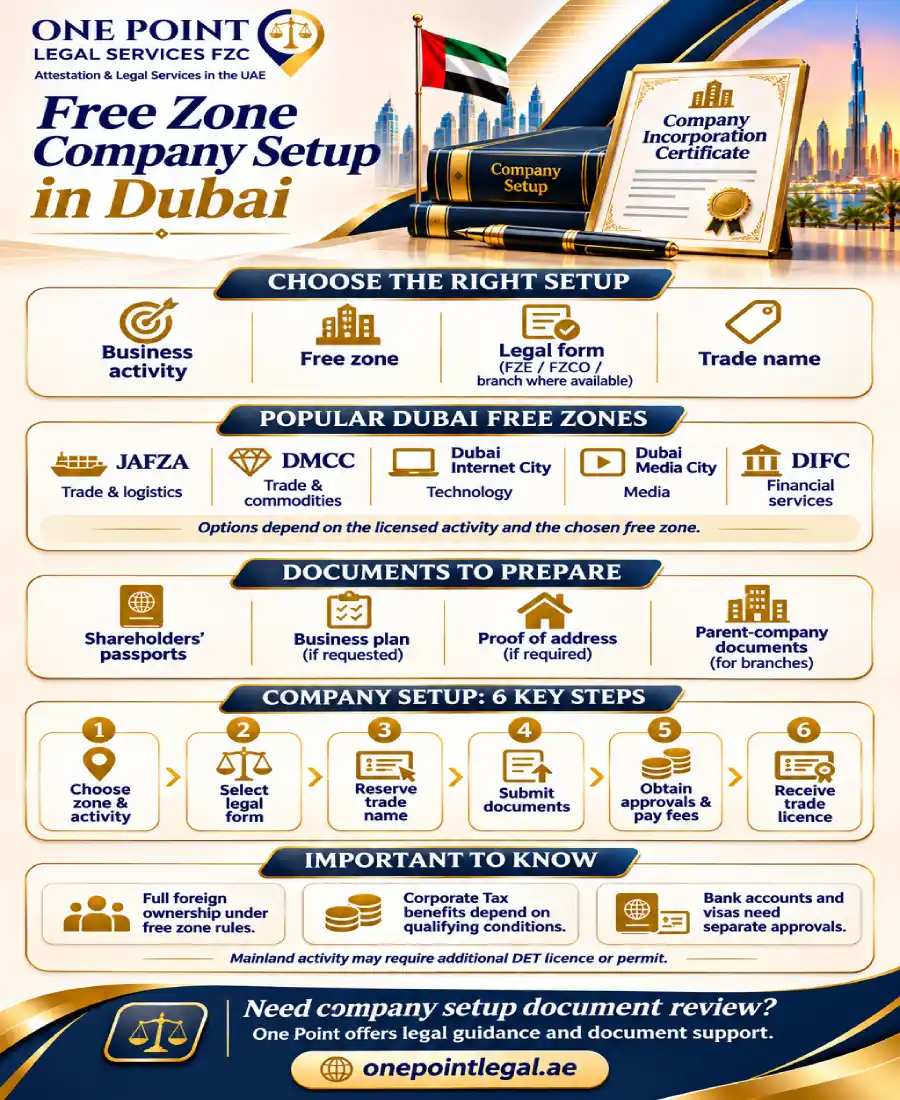
Documents differ according to the free zone, the type of activity, the legal form, and the shareholders.
Passport of partners and shareholders
A valid copy of each shareholder’s passport is usually required, along with any additional identity documents requested by the free zone.
Business plan for some activities
Some activities may require submitting a business plan or detailed information about the activity, the source of funding, and the expected clients according to the competent authority’s requirements.
Proof of place of residence
Proof of address or place of residence of the shareholder or manager may be requested according to the free zone’s requirements.
Documents specific to foreign companies
A foreign company wishing to register a branch may need documents specific to the parent company, such as the certificate of incorporation or memorandum of association and the decision to open the branch and other documents, taking into account attestation requirements where applicable.
Steps to set up a company in a Dubai free zone
The setup steps differ from one free zone to another, but the path usually includes choosing the activity and legal form, then submitting the application, completing the documents and approvals, and issuing the licence.
Choosing the free zone suitable for the activity
The steps begin by comparing the free zones that permit the required activity in terms of cost, location, office, requirements, and available services.
Reserving the trade name
The proposed name is submitted and approved according to the rules of the chosen free zone.
Submitting the setup application
The company setup application is submitted to the competent free zone authority along with the required documents and data.
Obtaining the necessary approvals
Some activities may require obtaining additional approvals from competent regulatory authorities before issuing the licence.
Issuing the trade licence
After meeting the free zone’s conditions, approving the application, and paying the fees, the licence is issued according to the type of activity and the chosen package. The method of issuing the licence and the final documents differ according to the system adopted by each free zone.
Applying to open a company bank account
After issuing the company documents, you can apply to a bank to open a commercial bank account. Opening the account remains subject to the bank’s policies and Know Your Customer and due diligence requirements, including verifying the company’s identity, the beneficial owner, the nature of the activity, the purpose of the account, and the source of funds as applicable. Issuing the licence alone does not guarantee acceptance of the account-opening application.
Applying for investor and employee visas
After setup, residency applications or investor and employee visas can be applied for according to the visa quota and the free zone’s conditions and the requirements of the competent authorities. Visas are not issued automatically merely upon issuing the licence.
The difference between setting up in a free zone and the mainland
There are practical and regulatory differences between setting up in a free zone and the mainland, and the most suitable choice depends on the activity, the target market, and the operating requirements.
Foreign ownership
Free zones allow 100% foreign ownership according to their rules. The vast majority of mainland activities in Dubai currently also allow full foreign ownership, while some activities retain special requirements or restrictions according to the nature of the activity.
The scope of doing business within Dubai
A free zone company originally operates within the scope of the licence issued to it by the free zone authority. If it wishes to carry out an activity outside the free zone and within the emirate of Dubai, it may do so for the permitted activities after obtaining the appropriate licence or permit from the Department of Economy and Tourism and meeting the prescribed requirements and approvals. Executive Council Decision No. 11 of 2025 permits, according to the activity and applicable conditions, issuing a licence to establish a branch within the emirate, or a branch operating from the free zone’s premises, or a permit to carry out specific activities. This system does not apply to financial establishments licensed to operate in the Dubai International Financial Centre.
Costs and legal requirements
Costs differ in both cases according to the activity, the legal form, the office, and the required approvals. Some free zones may offer setup packages that combine a number of services in a single cost, while some requirements are calculated separately.
Flexibility in future expansion
A company’s needs may change after setup, such as the desire to expand the scope of activity within Dubai or add activities or branches, so the appropriate licensing and amendment requirements for each case must be reviewed. After setting up the company, you may need to protect its name and commercial identity by registering a trademark in the UAE in accordance with the approved procedures.
Common mistakes when setting up a company in a free zone
Choosing a free zone unsuitable for the activity
Choosing a free zone that does not offer the required activity or does not suit the target market may lead to the need to change the licence or business structure later.
Not studying future costs
The periodic renewal, office, visa, approval, and other service costs must be calculated when preparing the project budget, not just the initial setup cost.
Choosing an unsuitable legal structure
Choosing a legal form unsuitable for the number of shareholders or the project’s needs may lead to the need to amend the structure at a later stage.
Not reviewing the legal and regulatory requirements before setup
Some cases may require a legal or regulatory review before setup, especially when there are several shareholders, investment agreements, or a regulated activity.
When do you need legal advice before setting up the company?
The need for a legal review arises more when the file goes beyond the usual administrative licensing procedures and includes legal relationships or obligations that need to be organized.
When there is more than one partner
When there is more than one partner, it may be appropriate to organize the rights, obligations, decision-making mechanism, and exit from the company from the start.
Drafting partner and shareholder agreements
Partner and shareholder agreements help organize ownership percentages, powers, the decision-making mechanism, profit distribution, and other matters agreed between the parties.
When choosing the appropriate legal structure
Some projects may need to review the available legal options and compare them according to the number of shareholders, the activity, and the expansion plan.
Company formation and legal structuring
The One Point team can review the company’s structuring requirements and organize the related legal documents within the agreed scope of service.
When reviewing legal and regulatory obligations
A company may need to review its legal and regulatory obligations when there is a regulated activity, contracts, or changes in the ownership or management structure.
Corporate legal consultations
Corporate legal consultations may include contractual, regulatory, and structural matters according to the nature of the company’s need and the scope of service.
How does One Point help with setting up a company in a free zone?
One Point Legal Services helps review the nature of the activity and the investor’s needs, compare free zone options, organize the setup documents, and coordinate and follow up on the application procedures within the scope of its services. The support may include:
- Reviewing the activity and the appropriate legal form.
- Comparing free zone requirements according to the activity and budget.
- Organizing and preparing the setup documents.
- Following up on completion requests and approvals related to the file.
- Reviewing partner agreements and legal documents when needed.
- Coordinating the subsequent procedures related to visas or regulatory requirements within the scope of service.
Scope of service: The competent free zone authority is responsible for approving the company’s setup and issuing the licence according to its rules. Residency and visa applications are subject to the competent authorities and the free zone’s requirements, and opening the bank account is subject to the bank’s decision and its due diligence procedures. One Point helps with reviewing, organizing, coordinating, and following up, without guaranteeing the issuance of the licence or visa or acceptance of the bank account opening. If the company’s activity requires doing business outside the free zone and within Dubai, it can be reviewed whether a branch licence or a permit from the Department of Economy and Tourism is required under the applicable regulations.
If you are planning to set up a company in a free zone, the One Point team can review your activity and requirements and determine the appropriate path and the documents required before starting the application.
Frequently Asked Questions
What are the procedures to open a company in a Dubai free zone?
The procedures begin by choosing the activity, the free zone, and the appropriate legal form, then approving the name, submitting the setup application and documents, paying the fees, and completing the required approvals until the licence is issued. After that, you can separately apply to open the bank account and residency or visa applications when needed.
What are the steps to set up a company in a free zone?
They usually include choosing the activity, the free zone, and the legal form, approving the trade name, submitting the documents, obtaining the necessary approvals, then issuing the licence. The details differ from one free zone to another.
Can free zone companies do business outside the free zone within Dubai?
This is possible for the permitted activities and after obtaining the appropriate licence or permit from the Department of Economy and Tourism and meeting the required approvals under Executive Council of the Emirate of Dubai Decision No. 11 of 2025. The path differs according to the activity; it may require establishing a branch within the emirate, licensing a branch operating from the free zone's premises, or a permit to carry out a specific activity. This system does not apply to financial establishments licensed in the Dubai International Financial Centre.
What law regulates free zone companies in Dubai?
Each free zone is subject to the legislation and regulations that govern it and to its competent authority, in addition to the federal and local legislation applicable to the activity and the case. When a free zone establishment carries out an activity outside the zone and within Dubai, the provisions regulating that also apply, including Executive Council Decision No. 11 of 2025 where applicable.
How much does a trade licence in a Dubai free zone cost?
The cost differs according to the free zone, the type of activity, the legal form, the office, the number of visas, the services, and the chosen package, so there is no single price that can be generalized across all free zones.
How much does a Dubai free zone visa cost?
The fees differ according to the type of residency or visa, its duration, the free zone, the services related to the application, and the applicable government requirements.
What is the cheapest free zone in the UAE?
No single zone can be identified as the cheapest for all investors, because the cost depends on the activity, the licence, the office, the number of visas, and the services required. It is best to compare the actual total cost of the packages suitable for the activity.
Read also
- Corporate Legal Consultancy in Dubai
- Memorandum of Association Preparation in the UAE
- Shareholders’ Agreement Drafting in Dubai
- Corporate Legal Services in the UAE
Disclaimer: The setup requirements, legal forms, fees, office, visas, and permitted activities differ from one free zone to another. Benefiting from the 0% Corporate Tax rate, or carrying out an activity outside the free zone and within Dubai, is not automatic; rather, it is subject to the conditions and licences prescribed for each case.
Official sources
- Executive Council of the Emirate of Dubai Decision No. 11 of 2025 regulating the practice by free zone establishments of their activities within the emirate of Dubai.
- Dubai Department of Economy and Tourism / Invest in Dubai platform – establishing companies in free zones and the mainland.
- Federal Decree-Law No. 47 of 2022 on the Taxation of Corporations and Businesses and the decisions issued thereunder.
- Ministerial Decision No. 229 of 2025 on qualifying activities and excluded activities for the purposes of the Corporate Tax regime in free zones.
- Federal Tax Authority – the Corporate Tax regime for free zone persons.
- Central Bank of the UAE – due diligence and Know Your Customer requirements for financial institutions.
Last reviewed: October 2026
